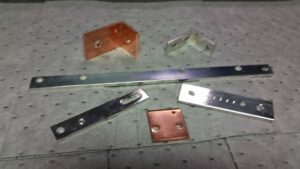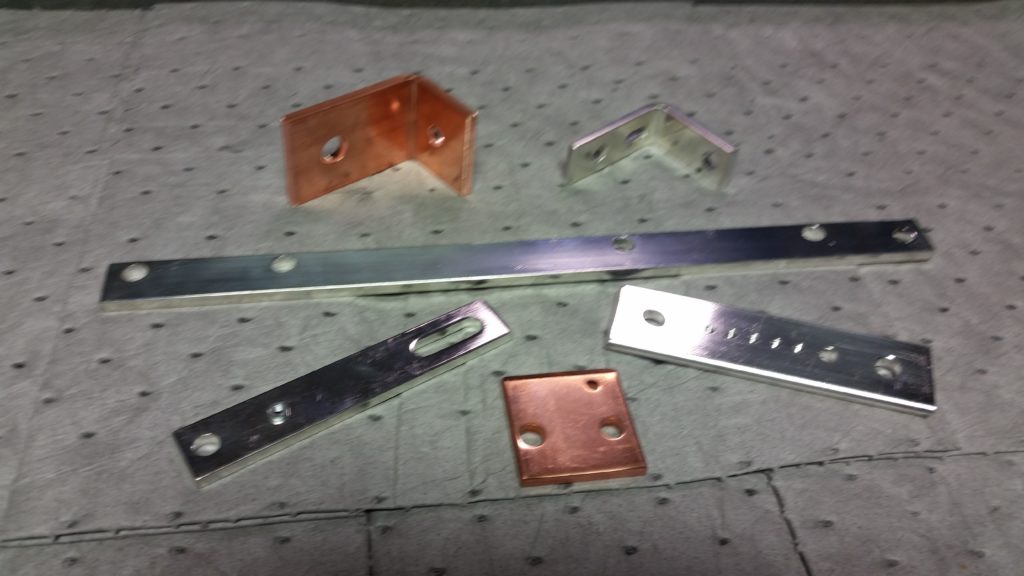
A busbar distributes electrical power inside equipment, enclosures, switchboards and electrical substations. Busbars are typically made from copper, although they can also be made from aluminum.
How a Busbar Works
A busbar works by being the central hub for distributing power from an incoming electric power source. According to Busbar Machine, busbars can carry more current than regular wires or cables. Other circuits and components are attached to the busbar for electrical power.
Copper or Aluminum
Copper and aluminum are the most common materials for busbars. These materials are highly conductive. Of the two, copper has the most conductivity but is also more expensive according to Science Insights.
Copper dissipates heat more effectively and is mechanically stronger.
Related: Considerations for Busbar Manufacturing Costs
Types of Plating
Plating is used to improve electrical conductivity and corrosion resistance. Types of plating include tin, nickel and silver. Plating may not be required for busbars used in controlled environments where temperatures, humidity and air quality are not issues.
Busbars distribute electrical power and are typically made from copper or aluminum.
About C&C Machine
We manufacture custom busbars. Most of our busbars are made from copper. Many receive plating. We are centrally located in Oklahoma.